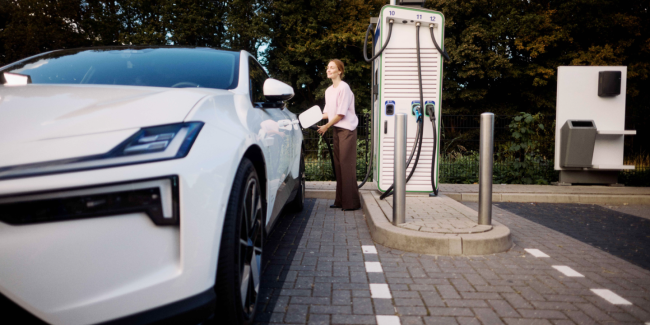
- Smart charging of electric vehicles is an important solution for avoiding peak demand.
- Advanced smart charging algorithms and robust smart charging protocols are vital tools for making smart charging a success.
- Grid congestion is one of the biggest obstacles to expanding EV charging infrastructure.
Grid congestion, peak demand and renewable energy are often-heard terms when talking about the energy transition. Smart charging is presented as one of the golden bullets for making EV charging more sustainable, cheaper and with fewer constraints on the current energy infrastructure.
We have been part of Re-ESCAPE, an important pilot project that researched how smart charging could work in practice. These are the lessons that we’ve learned.
Why do you need smart charging?
The transition to electric vehicles (EVs) is an irreversible revolution and an important element in the energy transition. However, this shift has already introduced new challenges to our energy grids.
Grid congestion is one of the major obstacles to EV charging infrastructure expansion. The grid already suffers from peak demand between 16:00 and 21:00 in the afternoon. That’s when everyone returns home from work, and many home chores are carried out with the use of electronic devices like dishwashers and washing machines. This energy use spike has been magnified by EV charging.
Uncoordinated EV charging can lead to more peak demand spikes, grid instability, and inefficient energy utilisation. That’s where smart charging comes in—an intelligent approach to managing EV charging to avoid peak hours.
At the forefront of this innovation was the Dutch RE-ESCAPE project.
What is the RE-ESCAPE project?
RE-ESCAPE, an acronym for "Resubmission Experiment Smart Charging Algorithms and Protocols for EVs," was a Dutch government-funded initiative that looked into the practical use of smart charging. Its core mission was to align EV charging demand with the availability of renewable energy sources, thereby maximising the positive impact of EVs on climate goals.
This ambitious project involved key partners like GreenFlux, TotalEnergies Charging Solutions NL, Dexter Energy Service, Stichting Nationaal Kennisplatform Laadinfrastructuur (NKL), and the EVRoaming Foundation.
’Re-ESCAPE is a project about smart charging of electric vehicles in the Netherlands,’ said Bob Elders, Product Manager Smart Charging at GreenFlux. ’What it really comes down to is that we charge EVs at times when there is a lot of energy available from renewable sources.’
What are the benefits of smart charging?
When EVs plug in simultaneously after work, it creates massive energy demand peaks. Local grids are overwhelmed, forcing costly infrastructure upgrades. This is where smart charging comes to the rescue.
Smart charging, in essence, means increasing or decreasing the maximum charge rate of an EV over a set period of time. So, by intelligently optimising the management of EV charging processes, you can distribute charging sessions more evenly across different timeslots during the night and early morning. It considers various factors, including grid conditions, renewable energy availability, real-time electricity prices, and user preferences.
The four main benefits of smart charging are:
- Reduced grid strain: By distributing charging loads throughout the day and night, smart charging reduces peak demand spikes. That results in less stress on the grid and potentially postpones the need for expensive grid reinforcements.
- Increased renewable energy integration: Smart charging allows EVs to charge when renewable energy sources, such as solar and wind, are abundant. This maximises the use of clean energy and reduces reliance on fossil fuels.
- Enhanced grid stability: In more advanced forms, smart charging can even enable EVs to act as flexible resources, providing services back to the grid (Vehicle-to-Grid or V2G) to help balance supply and demand.
- Cost savings for EV drivers: By charging during off-peak hours or when renewable energy is plentiful, EV drivers can benefit from lower electricity prices, leading to significant cost savings.
Smart charging algorithms and protocols for a smarter grid
The RE-ESCAPE project specifically addressed three main challenges:
- The variability of renewable energy.
- Grid stability and congestion.
- Maintaining interoperability between the stakeholders in EV charging.
To tackle these, RE-ESCAPE focused on two key solutions: advanced smart charging algorithms and robust communication protocols.
Developing advanced smart charging algorithms
At the heart of RE-ESCAPE's innovation were sophisticated algorithms designed to optimise EV charging profiles. At GreenFlux, we developed algorithms to steer EV charging load profiles based on energy market prices on TotalEnergies' public charging network. This means that charging sessions were dynamically adjusted to take advantage of periods when electricity is cheaper and—often—greener.
Dexter Energy Services complemented this by developing algorithms to predict day-ahead energy prices and further optimise EV charging loads. By accurately forecasting energy availability and pricing, the system could proactively schedule charging, ensuring that EVs are charged when it's most beneficial for both the grid and the consumer.


The project successfully demonstrated the effectiveness of these algorithms by shifting charging loads from evening demand peaks to the night and early morning hours. This resulted in a clear reduction in peak demand and a shift towards time windows with more renewables in the energy mix, directly contributing to sustainability goals.
To elaborate on that, wind power is more productive at night. With less energy demand, it means that the available renewable energy is efficiently used. The pilot project involved 96 charging points across two locations in the Netherlands—Zeist and Heerhugowaard—providing valuable real-world data on the impact of these smart charging strategies.
These algorithms go beyond simple time-of-use pricing, which merely encourages consumers to shift charging. They involve a more direct and automated control of charging, ensuring that adjustments are made with minimal inconvenience to the EV driver.
“In this project, we first explored how to control the charging stations in the smartest way possible. But equally important is the interaction with the user. So, we strive to keep everything as simple as possible for the EV driver,” Bob explained.
“The algorithm takes care of everything for the driver. It ensures that the driver can charge at times when the energy is as cheap as possible. We actually believe that if an EV driver can simply indicate when they are in a hurry—and only that—that should already be sufficient to adopt smart charging.”
’This resulted in a clear reduction in peak demand and a shift towards time windows with more renewables in the energy mix.’
Setting up robust smart charging protocols
Beyond intelligent algorithms, the success of large-scale smart charging hinges on effective communication and data exchange between various stakeholders. This includes Charge Point Operators (CPOs), energy market players, grid operators, and even the vehicles themselves.
RE-ESCAPE has made significant contributions to the Open Charge Point Interface (OCPI) protocol, a crucial standard for interoperability in the EV charging ecosystem. OCPI facilitates improved information exchange and EV driver interaction, enabling the seamless flow of data necessary for smart charging to function.


The project aimed to create and practically test a set of protocols that allow energy and system market players to communicate with parties that can unlock the flexibility of EVs through hundreds of thousands of simultaneously controlled charging points. This moves beyond simply managing total power at a connection point to steering charging at the individual charge point level (connection-level).
The development of new open smart charging protocols at the street/connection level, along with the application of smart charging to at least 1,000 public charge points that can be virtually linked, was a key aspect of RE-ESCAPE. This infrastructure allows for the measurement and evaluation of various smart charging scenarios in real-world conditions, providing valuable insights into how to scale these solutions nationwide.
Sustainability and economic benefits: a win-win scenario
The RE-ESCAPE project showed promising results, underscoring the sustainability and economic benefits of smart charging.
Let’s talk numbers now. Over the total test period of one month, 6% of the load was shifted, resulting in peak demand reductions up to 17% and an increase in average renewable energy of approximately 1.5%.
To put the increase in use of renewable energy into perspective, simulations were performed to forecast maximum gain. The simulation results showed that—under optimal conditions and under the boundaries as defined within the pilot project—a maximum 3.5% increase in renewable energy use can be achieved by active steering of load profiles based on energy prices.
However, as this project was conducted some years ago, these percentages of renewable energy used have only become higher now as much more renewable energy is being produced today.
'This is one of those unique situations where charging in the most sustainable way possible is almost similar to charging as cheaply as possible.'
Bob Elders, Product Manager Smart Charging at GreenFlux
So, the pilot directly contributed to a greener energy mix and a reduction in greenhouse gas emissions from charging EVs. Shifting charging to times of high renewable energy availability means less reliance on fossil fuel-based energy generation to meet demand, leading to an evident CO2 reduction.
Moreover, smart charging offers significant economic advantages.
- For EV drivers, charging during off-peak hours can lead to lower electricity bills, making electric mobility even more attractive.
- For grid operators, the ability to manage and flatten demand peaks can avoid costly investments in grid reinforcement, freeing up resources for other necessary infrastructure developments.
- For energy market players, a smart charging ecosystem can increase flexibility and stability to the grid.
Bob is clear about the results of the RE-ESCAPE pilot: 'This is one of those unique situations where charging in the most sustainable way possible is almost similar to charging as cheaply as possible.'
The road ahead for smart charging
The RE-ESCAPE project has provided invaluable insights into driver behaviour and demonstrated the viability of advanced smart charging solutions. The findings highlight the importance of linking EV charging to electricity prices and developing robust algorithms and protocols to manage the complex interplay between energy supply and demand.
The future of electric mobility is, without a doubt, intertwined with the evolution of smart grids. The ongoing refinement of algorithms, the standardisation of protocols, and the continued collaboration between all stakeholders will be key to making full use of smart charging's full potential and accelerating our journey towards a truly sustainable and electric future. And the focus on both environmental and economic outcomes is crucial for the widespread adoption of smart charging.
The lessons learned from RE-ESCAPE have helped us and all stakeholders further develop a smart charging solution. With that, we ensure that the transition to electric vehicles is not only swift but also smart and sustainable.
Frequently Asked Questions (FAQ)
What is grid congestion?
Grid congestion is a bottleneck in the electricity network where the demand or supply of power exceeds the physical capacity of cables and transformers, similar to a traffic jam on a highway, often happening during peak hours or in areas with high renewables like solar/wind farms, leading to delays for new connections, limits on electrification, and higher costs. It's a growing issue due to the energy transition, as grids built for stable loads struggle with fluctuating renewable energy and increased electric vehicle (EV) charging.
What is peak demand?
Peak demand refers to the period when consumer energy consumption is at its highest. This is roughly between 17:00 and 21:00, when consumers come home from work and start using power for their electric devices, such as charging their electric vehicles or running their washing machines.
What is smart charging?
Smart charging, in essence, means increasing or decreasing the maximum charge rate of an EV over a set period of time. So, by intelligently optimising the management of EV charging processes, you can distribute charging sessions more evenly across different timeslots during the night and early morning. It considers various factors, including grid conditions, renewable energy availability, real-time electricity prices, and user preferences.