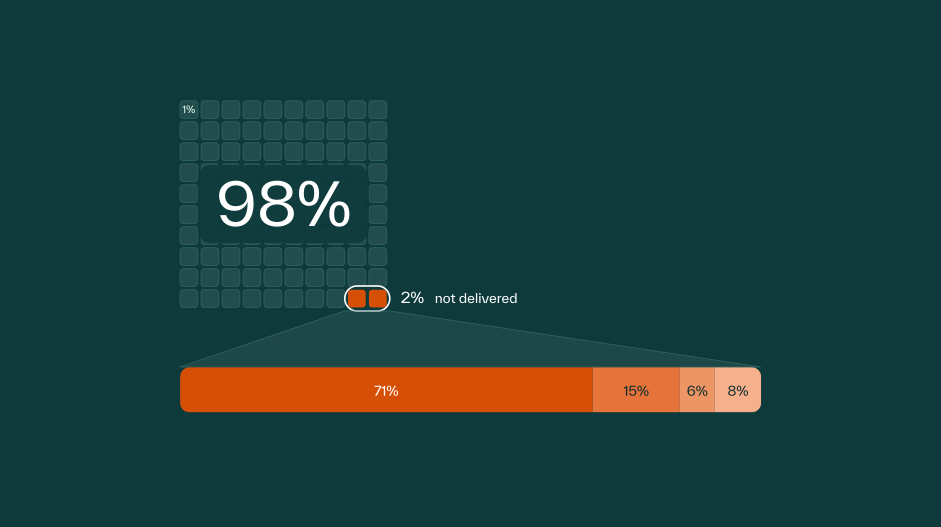
Every roaming session looks effortless: tap, connect, charge.
However, behind the scenes, we have a complex chain of processes that ensure each transaction is verified, reconciled, and paid. When done well, these should be seamless, for all parties involved: charge point operators (CPOs), eMobility Service Proviedrs (eMSPs), and drivers alike.
GreenFlux's managed roaming network is one of the largest in Europe. It connects 540+ CPOs to 100+ eMSPs and millions of tokens to 1.2M+ chargers. In practice, this means we are currently processing 1.1 roaming sessions every single second.
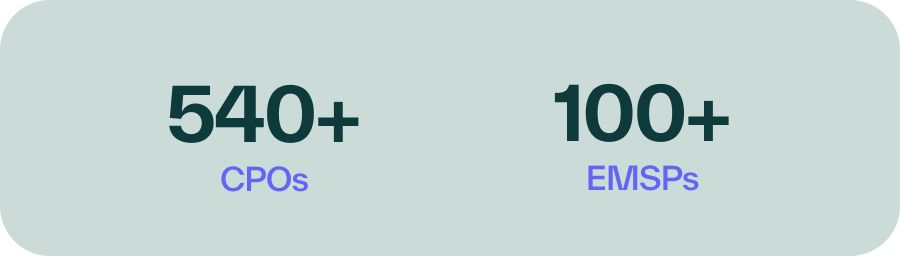

Figure 1. Number of CPOs and EMSPs in the GreenFlux roaming network.
And, to ensure a seamless experience at these high-frequency volumes, we’ve built a robust organisation and processes that aim to make each session look... boring to all the parties involved.
In this article, you will learn about why this roaming organisation exists, what it looks like, and what it means for the operators who depend on it.
But, before we get to the people, it will benefit you to understand what they are actually managing.


The chain behind every roaming session
Contracting
Before any session can happen, contracts need to be in place. Each relationship requires a commercial agreement: pricing terms, liability clauses, dispute resolution mechanisms, regulatory obligations across multiple markets, et cetera.
Worth noting is that negotiating and maintaining those agreements is a continuous commercial function that grows more complex as the roaming network expands.
Charging
A single roaming session generates a charge detail record (CDR). That CDR must be:
- Transmitted and validated.
- Checked for accuracy against what the charge point delivered.
- Flagged and resolved if discrepancies arise.
Across hundreds of CPO and eMSP connections, CDR validation alone is a huge, continuous operational task.
Settlement
Then, there is the financial layer:
- Reconciliation — matching records across partners, identifying gaps.
- Clearing — producing statements both parties can stand behind.
- Settlement — agreeing precisely what is owed.
- Payment — transferring funds on terms that work for the CPO's cash flow.
Each step is distinct, and each can be a point of failure without the right processes and people behind it.

The organisation we built around it
At GreenFlux, we have spent years building the operational infrastructure needed for a seamless managed roaming operation.
And being part of DKV Mobility gave us access to specialised shared resources and economies of scale that are extremely difficult to achieve by other parties in the industry.
Here is what that looks like in practice.
Roaming Operations | GreenFlux
Our core Roaming Operations team manages the day-to-day:
- Technical integrations and session monitoring.
- CDR handling and exception management.
- Direct support and guidance for our CPO customers.
They are the people who notice when something is developing into a problem before it becomes a dispute or a payment delay.
Supplier Management | DKV Mobility, dedicated to GreenFlux
A dedicated Supplier Management team grows and maintains the roaming network itself. These colleagues are part of the DKV Mobility group but work exclusively on expanding GreenFlux's roaming network. They are managing relationships with CPOs and eMSPs across Europe, negotiating the direct connections that expand what our network can offer.
Starting from scratch in 2018, they are our true roaming pioneers. Now, thanks to their continuous effort, we are processing over 34.8 million roaming sessions annually.
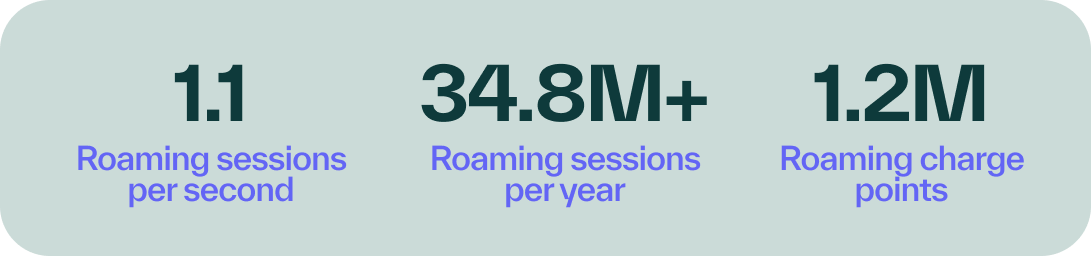

Figure 2. Number of roaming sessions per second, number of roaming sessions per year, and number of charge points in the GreenFlux roaming network,
Supplier Operations | DKV Mobility, shared service
Signing a contract is just the beginning.
Our Supplier Operations team handles what comes after: setting up the processes on both sides, ensuring everything is configured correctly, and making sure the operational relationship functions as intended from day one. They are the bridge between commercial agreement and reliable execution.
Settlement | DKV Mobility, Shared Services
The Settlement Team manages the financial reconciliation layer. They ensure that every session, across every partner, every billing cycle, is accounted for correctly.
Based within DKV Mobility's Shared Services structure, this team brings institutional financial expertise that most standalone roaming operations cannot replicate. The accuracy of their work is what makes payment predictability possible in the first place.
And these are just some of the teams involved
Besides the teams mentioned above, our roaming operations are also supported by other internal and shared teams.
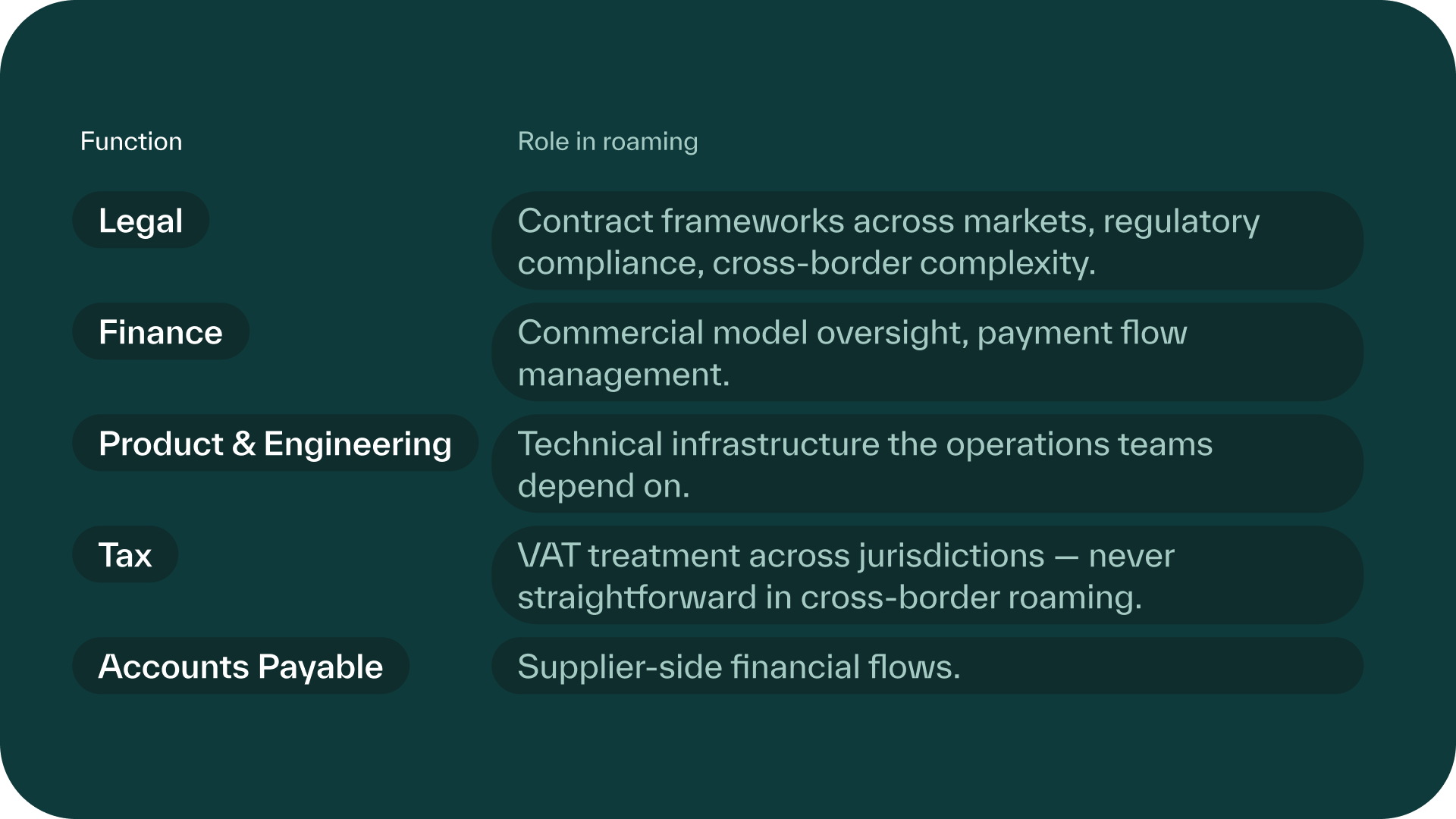

Figure 3. Roles of the different internal departments within the roaming value chain.
In total, more than 40 people across GreenFlux and DKV Mobility serve not just one customer, but all our managed roaming customers.
That shared scale is precisely what makes our roaming operation so efficient. A peer building this alone would carry the full cost of every specialism for the benefit of one operation.
Build vs buy – the eternal question
Some operators build roaming operations in-house, but few manage to do it well and keep their costs low.
Maybe not so obvious at first sight, but it requires hiring across multiple specialisms, building institutional knowledge that only accumulates over time, and developing relationships that take years to establish and leverage.
For most parties, roaming is essential — but it will never be their core business.
Roaming is a thing that needs to work reliably in the background, without consuming management bandwidth every time something gets complicated. That is what managed roaming is built to deliver. Boring and efficiently.
And even for those who try, the economics rarely work in their favour. Building a roaming operation in isolation means bearing the full cost of every specialism alone — the legal expertise, the financial infrastructure, the settlement processes — without the efficiency that comes from running it at scale across hundreds of customers.
The infrastructure they need to deploy, the customer relationships they need to manage, the operational decisions that drive their business; that’s where their attention belongs. Roaming is a thing that needs to work reliably in the background, without consuming management bandwidth every time something gets complicated.
That is what managed roaming is built to deliver. Boring and efficiently.
We built the roaming operation most CPOs can't justify building themselves. If you're evaluating what that could mean for your network, we're happy to talk through what it involves in practice.